AR · Eye Tracking · BCI
AI tools are transforming how we work, learn, and live — but there's a catch. Most of them still require you to type, tap, swipe, or navigate menus. The learning curve can feel steep, and the interaction often breaks the flow of what you're actually trying to do.
We asked ourselves: what if the device already knew what you were looking at? What if you could simply glance at something, ask a question, and get an answer — hands-free?
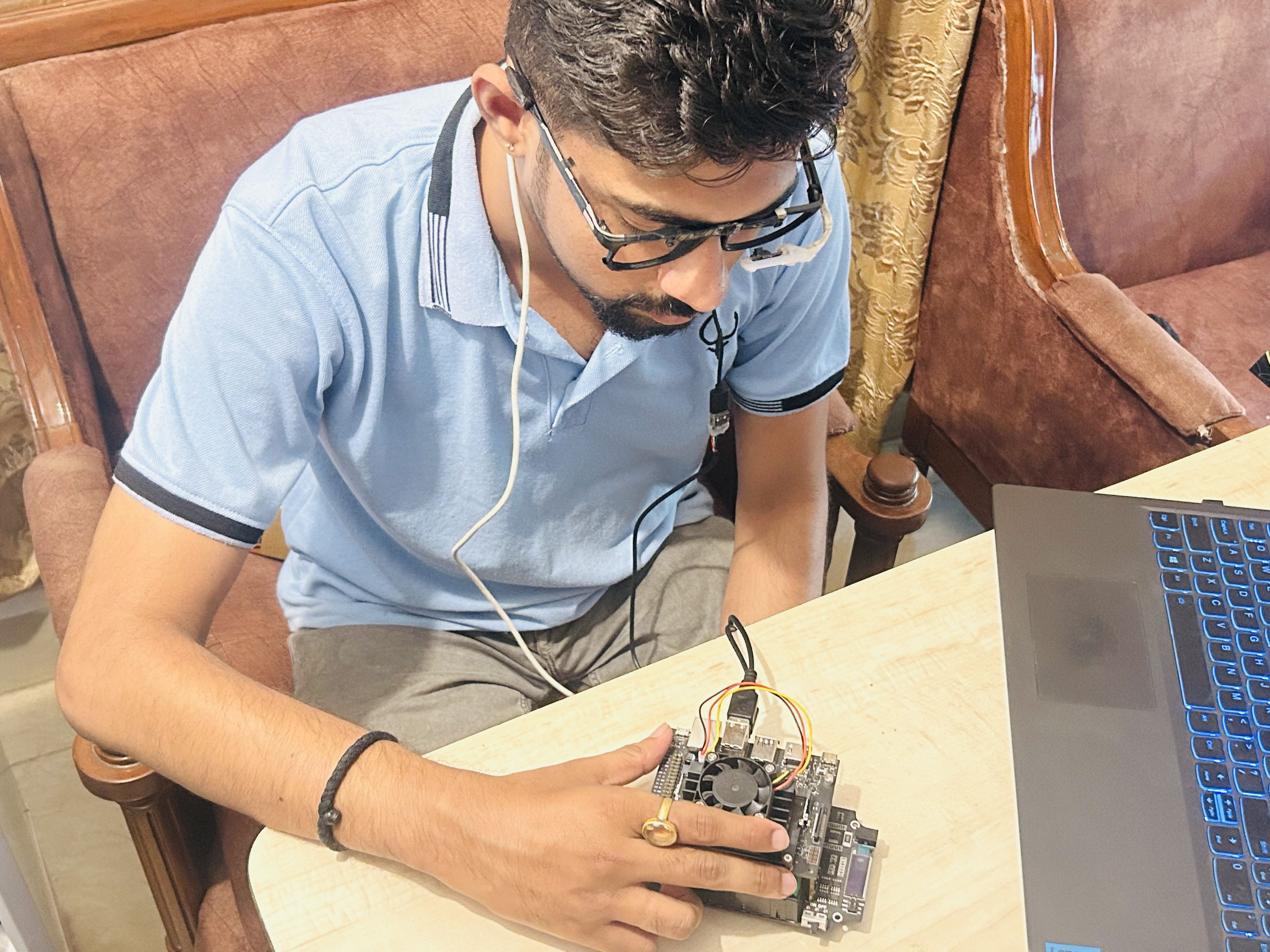
Vizon is a pair of AI-powered smart glasses that use eye tracking and brain-computer interface (BCI) technology to let you interact with your environment using just your eyes and attention.
The name "Vizon" is an alternate take on "Vision" — because these glasses don't just augment what you see, they use your vision as an input to understand and respond to the world around you.
1. You look at something — Vizon's custom-built eye tracking system follows your gaze with 90–95% accuracy.
2. You ask a question — a Vision Language Model running locally on the device identifies the object and processes your query.
3. You get an answer — the response is read out to you and displayed on the built-in AR display.
4. You confirm selections with your brain — using SSVEP (Steady-State Visually Evoked Potentials), a flickering icon appears next to the selected object. Simply pay attention to the stimulus, and the selection registers in just 2.7 seconds — no hands, no buttons, no effort.
Most devices rely on touch, voice, or gestures. Vizon introduces a new modality: gaze + attention. By combining what your eyes see with what your brain focuses on, Vizon removes the friction between intent and action. You don't have to learn a new interface — you just look and think.
Vizon isn't just a productivity tool. We're passionate about making this technology accessible for people who need it most — individuals with limited mobility or physical impairments who may not be able to use traditional input methods. Eyes and attention are all that's needed.
Competing eye-tracking and AR headsets often cost thousands of dollars. The Vizon prototype was built for approximately $350 USD, using carefully selected, cost-effective components without compromising on accuracy or functionality.
| Component | Details |
|---|---|
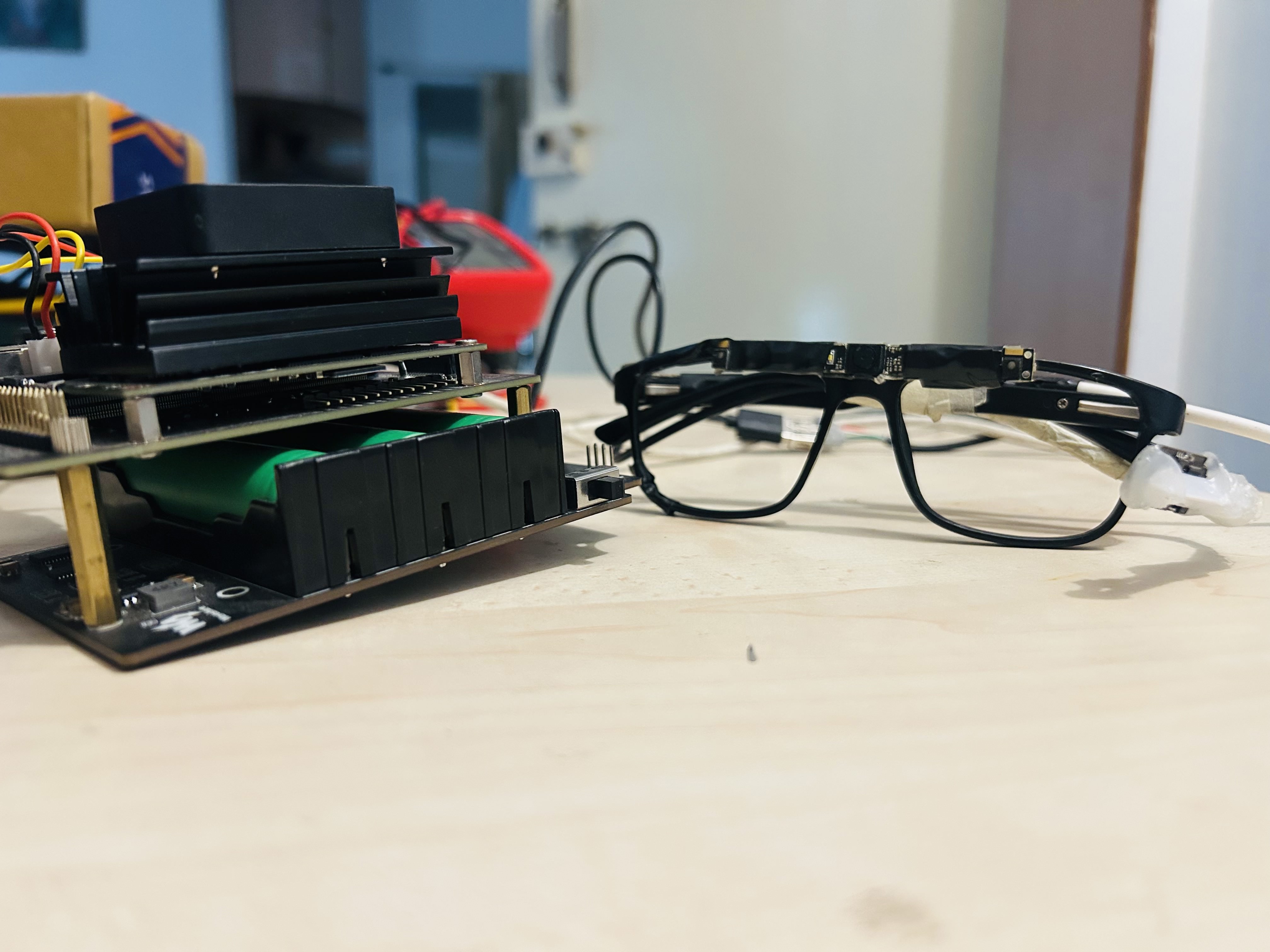
| Eye Tracking | Custom-built hardware and software with a proprietary vision model, 90–95% accuracy |
| BCI / SSVEP | OpenBCI Ganglion (4-channel EEG) for hands-free confirmation in 2.7 seconds |
| Camera | Repurposed laptop camera connected via USB serial |
| Compute | NVIDIA Jetson Nano — runs eye tracking and VLM locally |
| Display | AR display module for real-time visual feedback |
| Battery | 3000 mAh Lithium-Ion for portable use |
Look at any object in your surroundings, ask a question about it, and Vizon will identify it and provide an answer — all displayed on the AR overlay and read aloud.
Select and annotate objects in your environment using only your gaze and brain signals. No tapping, no clicking — just look and focus.